Common Pattern
Real time updates
Start with long polling → SSE → Websocket. Pub/sub is also a good way to decouple the publisher and subscriber. Long-polling doesnt serve the need anymore if it creates too much delay or wasted requests. If user need near-instant update.
Manage long-running tasks
Use queue base, return the job id. However if the job is small and affort to wait, it's better to just let the client wait then adding a queue.
Dealing with contention
Prevent race conditions when multiple user try to access the same resource. In here we have 2 choice:
- Use database level approach locking
Database Transaction
BEGIN;

UPDATE tickets
SET status = 'sold'
WHERE id = 42 AND status = 'available';

INSERT INTO orders (user_id, ticket_id)
VALUES (7, 42);

COMMIT;
CAS
- Only update if the version correct,
UPDATE tickets SET status = 'sold', version = version + 1 WHERE id = 42 AND status = 'available' AND version = 7 - Database itself will make sure it transaction, by default, for the same row, only 1 write can happen at a time
- Only update if the version correct,
- Implement a distributed locks (Redis, Zookeeper)
We can start with database transaction resolution first before we scale to distributed lock.
NOTE:
- If the data is changes across multiple row, use Transaction.
- If the data is just updating one record, use CAS
[!danger]
Given this problem, if we break out database to smaller database, we have the responsibility to deal with our own transaction cross database. This should be heavily considered and dont do it prematurely
Read scale
Read traffic grows much faster than write
We should follow these orders:
- Optimise read performance within database through Database Denormalisation and Database indexing
- Scale horizontally with Read replica pattern
- If scale with read replica, we need to know how to handle Database Replica lag solution
- Add external cache layers like Redis and CDNs
Write scale
Options:
- Sharding (horizontally)
- Verticle scale
- Burst write goes through queue
Large blob handling
Use CDN or S3 and use presigned url so that the client can download from CDN or S3 directly
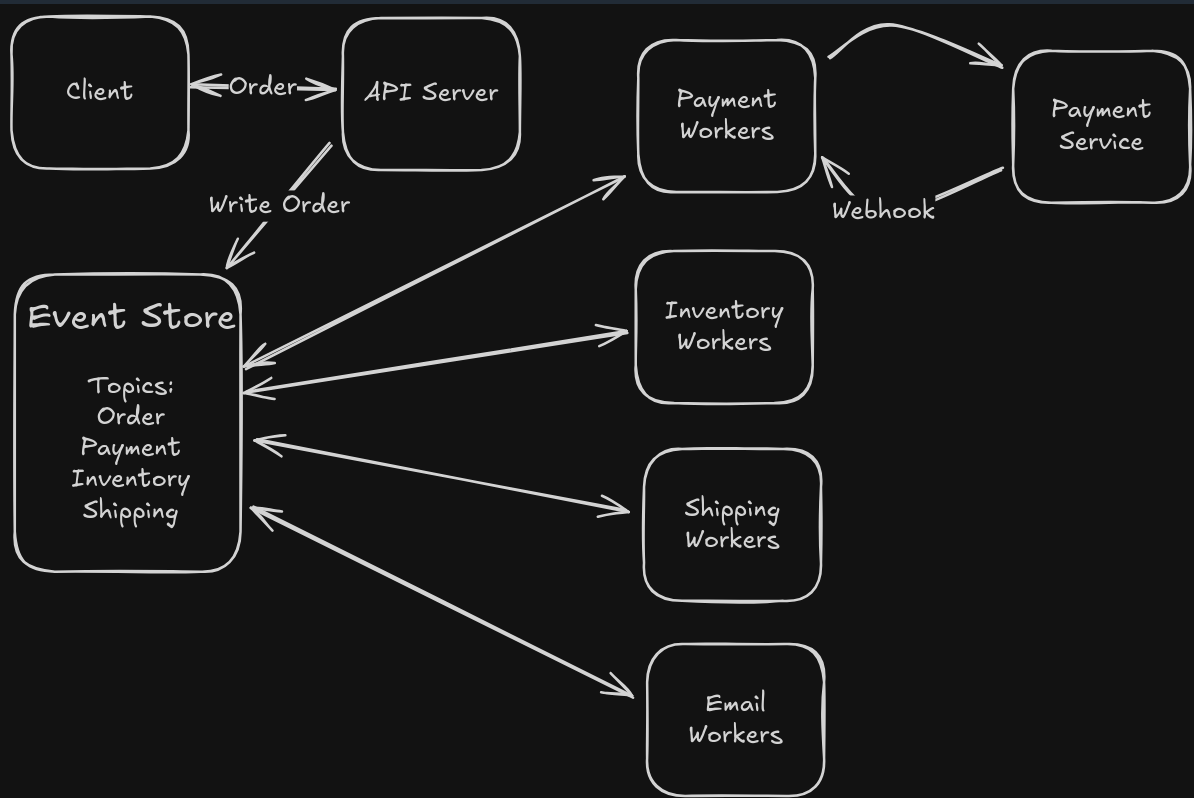
Multi-step fanout
We can use AWS Step Functions or Temporal for stage management. We can also use Kafka to split from an event to multiple steps worker to start processing parallely
Proximity-based service
For map based service, we need to use Geospatial index, PostgreSQL PostGIS, Redis Geospatial. For this, we dont build index since it's big, we better just manually scan the items